Noah Lorenz · 31 August 2026
Berlin's municipal government introduced revised housing regulations last month intended to accelerate affordable unit construction while adjusting rent stabilization rules in high-demand districts. The measures include streamlined permitting for new builds and a modest increase in allowable annual rent hikes from 2.5 to 3.8 percent in designated zones. Tenant associations immediately condemned the adjustments as insufficient protection against displacement amid rising property values.
Policy Provisions and Intended Outcomes
Under the updated framework, developers receive tax incentives for projects that allocate at least 30 percent of units to subsidized rents for ten years. City planners project the policy will add 12,000 new dwellings by 2028, targeting shortages documented in the latest housing census. Proponents cite data showing Berlin's population grew by 45,000 residents annually over the past five years, driving vacancy rates below 1.2 percent. Officials maintain the rent adjustment clause prevents investor flight while still limiting excessive increases. Independent analysts note similar policies in Hamburg produced mixed results, with some neighborhoods seeing accelerated turnover despite caps. The legislation also expands eviction notice periods to 90 days for tenants over age 65, responding to documented cases of elderly displacement.
Critics from the Berlin Tenants' Union argue the provisions favor large real estate firms and fail to address speculative buying that has inflated average asking rents by 22 percent since 2021. They point to loopholes allowing owners to claim hardship exemptions for higher increases. Municipal records show 8,400 hardship applications filed in the first quarter alone.
Protests and Public Response
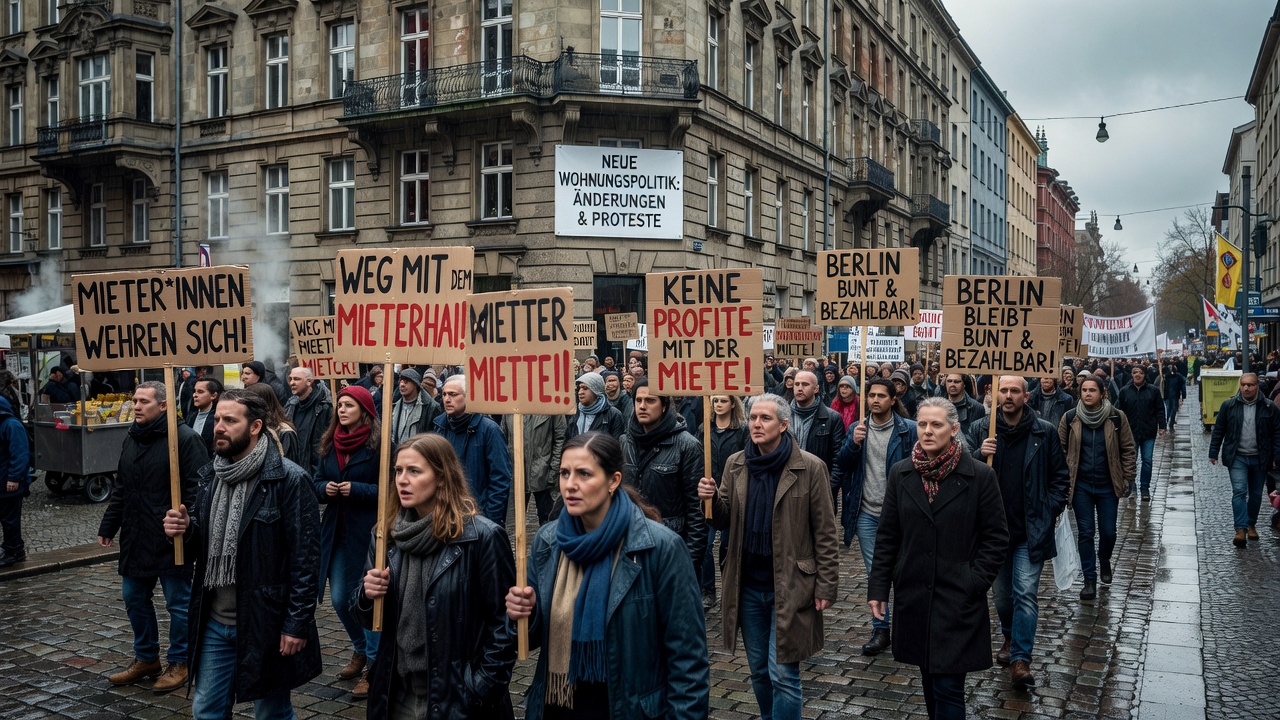
Over the weekend, an estimated 18,000 demonstrators marched through Kreuzberg and Friedrichshain, blocking key intersections and gathering outside the city hall. Organizers distributed flyers highlighting individual cases of families facing 40 percent rent jumps upon lease renewal. Police reported no major incidents, though traffic disruptions lasted several hours. Similar actions are scheduled in Neukölln and Mitte next week, with union leaders calling for a citywide rent freeze referendum. Local businesses along protest routes reported temporary closures due to street blockades. City spokespeople stated they welcome dialogue and will review implementation data after six months. International housing advocates have expressed interest in the outcome, viewing Berlin's experiment as a test case for European urban policy amid post-pandemic migration pressures.