Henrik Frank · 13 September 2026
Tracing the Revival of Indigenous Weaving Techniques Through Community-Led Workshops Across Remote Regions
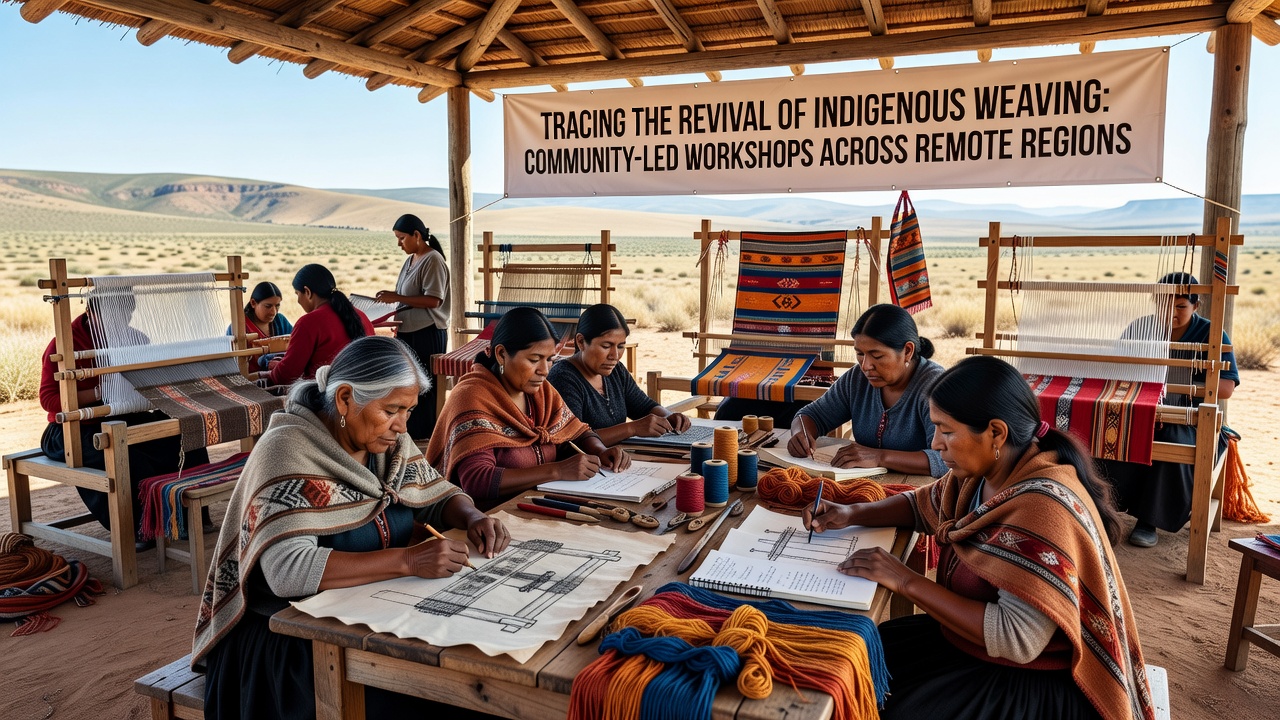
Community-led workshops have emerged as central drivers in the revival of indigenous weaving techniques across isolated regions worldwide, and these initiatives connect elders with younger participants who seek to preserve patterns and materials that faced near extinction in previous decades. Data from cultural preservation programs indicate rising enrollment in such sessions, particularly in areas where geographic barriers once limited access to formal training.
Historical Context of Weaving Traditions
Indigenous weaving practices developed over centuries in places ranging from the Andean highlands to the deserts of Australia, while incorporating local fibers such as alpaca wool, pandanus leaves, and cedar bark. Colonization and industrial textile production contributed to sharp declines in these methods during the twentieth century, yet oral histories and surviving artifacts document the complexity of motifs that encoded stories, social structures, and environmental knowledge. Researchers at institutions in multiple countries have documented how these techniques encoded seasonal calendars and clan identities through specific color combinations and knot structures.
By the early twenty-first century, several remote communities reported fewer than a dozen active practitioners in entire districts, according to surveys compiled by regional heritage offices. This scarcity prompted elders in places like northern Canada and the Pacific islands to initiate informal teaching circles that later evolved into structured workshops.
Expansion of Workshop Models
Workshops typically operate on schedules that align with seasonal migrations and harvest cycles, allowing participants to travel to central gathering points without disrupting subsistence activities. Facilitators combine hands-on instruction in spinning, dyeing, and loom construction with discussions of intellectual property rights over traditional designs, and this dual focus addresses both technical skills and legal protections. In September 2026, coordinated sessions across three continents will introduce digital documentation tools that allow remote groups to catalog patterns without removing physical textiles from their communities of origin.
Programs in the Amazon basin pair experienced weavers with youth who travel from riverine villages, while similar efforts in the Australian interior rely on mobile units that carry looms and natural dyes to outstations. Observers note that participation rates have doubled in several districts since 2020, driven by partnerships between local councils and national arts funding bodies. One study released by a Canadian research institute found that graduates of these programs establish independent production groups within eighteen months on average.
Regional Case Examples
Among the Shipibo-Conibo people of Peru, workshops emphasize the geometric kené designs once reserved for ceremonial textiles, and participants now adapt these motifs for commercial markets while retaining sacred meanings. In New Zealand, Māori weavers have revived the use of muka fiber from harakeke flax through community sessions that also teach associated protocols for harvesting and blessing materials. Australian Aboriginal groups in the Kimberley region focus on basketry techniques using local grasses, incorporating stories of Dreamtime ancestors into each completed piece.
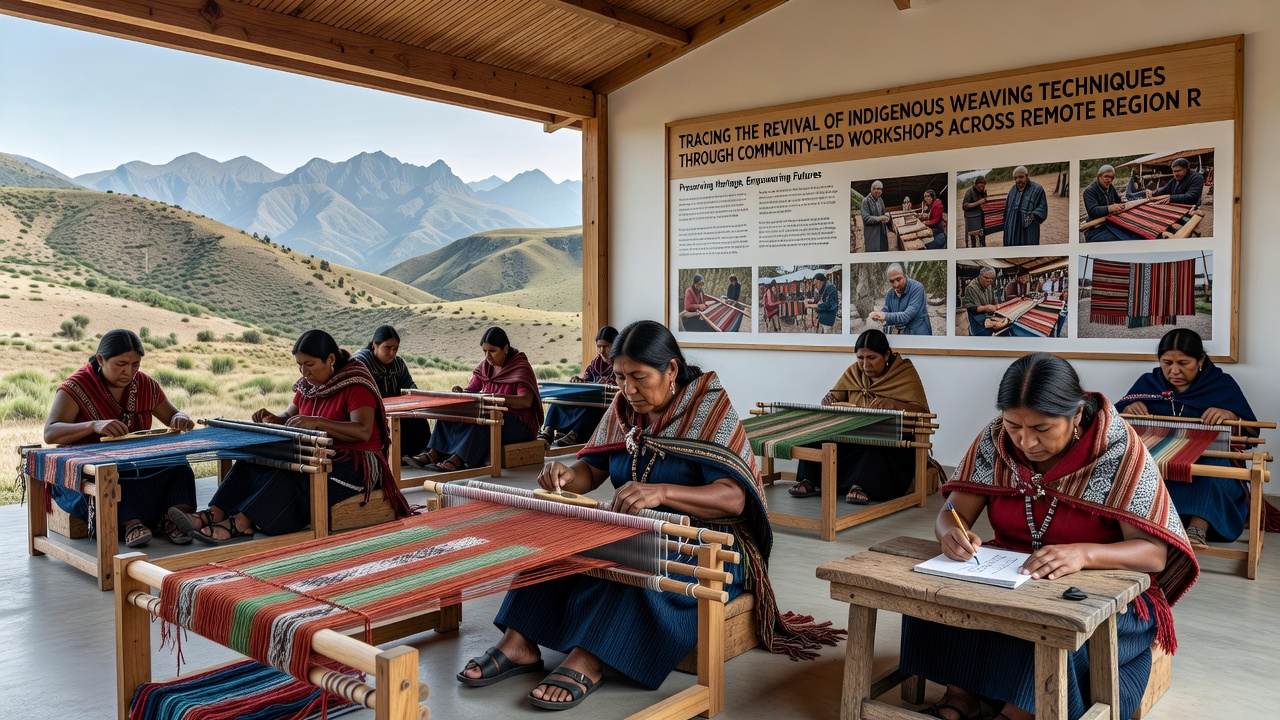
These efforts share common logistical features despite geographic differences, including reliance on elder instructors and emphasis on collective rather than individual ownership of knowledge. Funding often comes from a mix of government grants, nonprofit foundations, and direct sales of finished goods at regional fairs.
Measured Outcomes and Documentation
Quantitative assessments conducted by academic teams show increases in household income for participants who transition from subsistence weaving to organized production, with average gains reported between fifteen and thirty percent in tracked communities. Language retention also improves when workshops incorporate terminology specific to weaving processes that had fallen out of daily use. A report issued by the Australian Institute of Aboriginal and Torres Strait Islander Studies links sustained workshop attendance to higher rates of intergenerational knowledge transfer within families.
Challenges persist around supply chains for traditional materials, since climate shifts and land-use changes affect availability of certain plants and animal fibers. Workshop organizers respond by establishing small-scale cultivation plots and by experimenting with substitute materials that maintain structural integrity without altering cultural significance.
Conclusion
Community-led workshops continue to expand the reach of indigenous weaving techniques into remote regions where formal institutions have limited presence, and ongoing documentation efforts in September 2026 will provide updated metrics on participation and output. These programs demonstrate measurable contributions to cultural continuity while generating economic activity that remains under local control. Further monitoring by research bodies and heritage organizations will track long-term effects on both the techniques themselves and the communities that sustain them.